
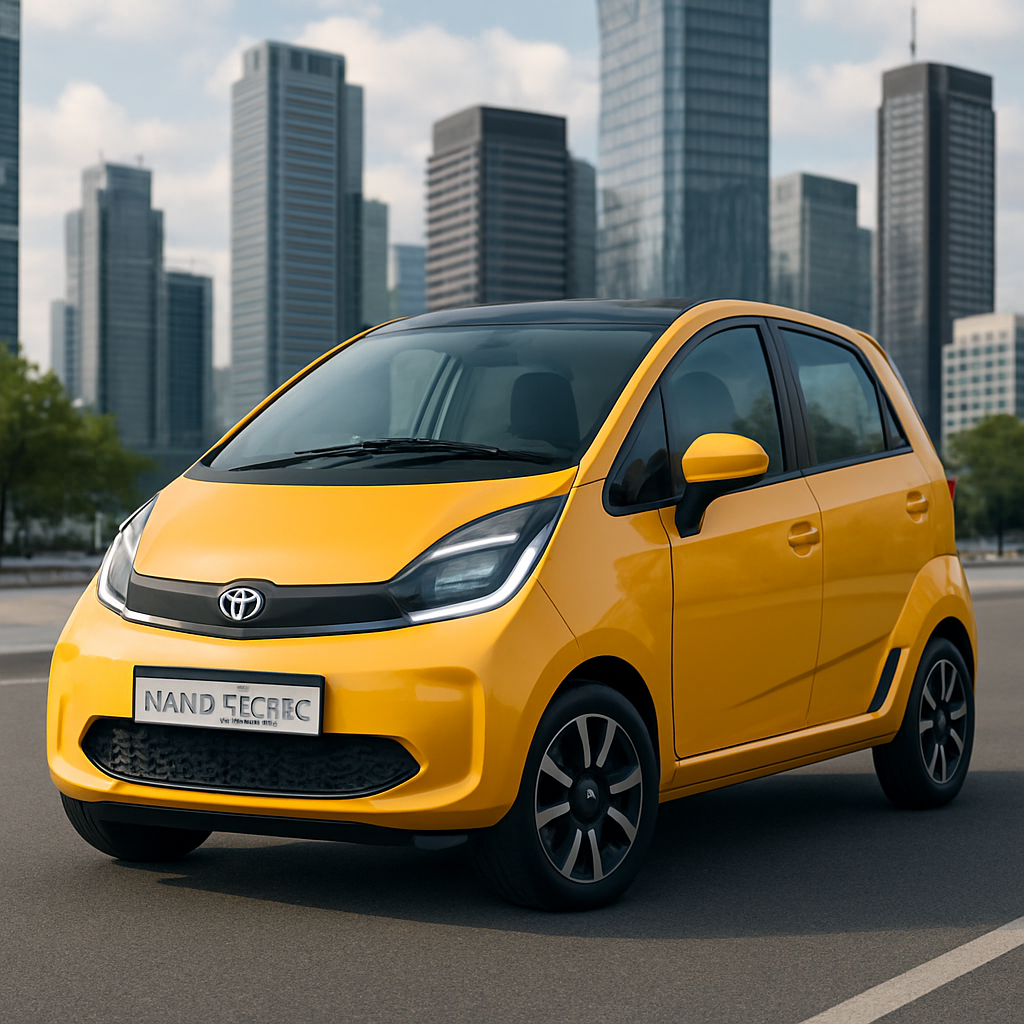
The Tata Nano EV is set to redefine affordable electric mobility in India. Once known as the world’s most budget-friendly car, the Nano is returning in an all-electric form. Compact, efficient, and built for daily urban needs, the Tata Nano EV promises to make sustainable driving accessible to millions of Indian commuters.
Expected Specifications and Features
- Battery & Range
Equipped with a 17–24 kWh lithium-ion battery, the Tata Nano EV is expected to deliver a range of 150–250 km on a single charge. This makes it an ideal choice for office travel, errands, and short city drives. - Performance
With a projected top speed of 80–100 km/h and a power output of 25–35 HP, the focus remains on practicality and efficiency rather than speed. The lightweight design ensures smooth city-friendly acceleration. - Charging Options
Fast charging could replenish up to 80% of the battery within 30–60 minutes ⚡, while standard home charging may take 5–6 hours, offering flexibility for city dwellers. - Interior & Technology
The cabin is expected to feature significant upgrades compared to the original Nano. A digital instrument cluster, infotainment touchscreen, smartphone connectivity, and refined upholstery will enhance comfort and usability. - Safety
Safety features are likely to include dual airbags, ABS with EBD, rear parking sensors, and possibly a rearview camera to boost driver confidence in city traffic.
Design and Comfort
The Nano EV will retain its compact, easy-to-drive design but with modern touches. Aerodynamic updates, LED DRLs, and stylish alloy wheels will add to its urban appeal. Despite its small footprint, the car is expected to provide ample headroom, legroom, and a practical boot—making it functional for daily shopping and family use.
Pricing and Market Position
The Tata Nano EV is expected to launch in the price bracket of ₹4–9 lakh (ex-showroom). This would position it as the most affordable electric car in India, attracting students, first-time car buyers, and eco-conscious families who need budget-friendly urban mobility.
Impact on Indian Urban Mobility
- Affordability: Makes EV adoption accessible to a wide audience.
- Eco-friendly operation: Zero tailpipe emissions, minimal maintenance, and low running costs.
- Competitive edge: While it will face competition from MG Comet EV, Tata Tiago EV, and Tigor EV, the Nano EV’s compact design and price advantage could set it apart.
Conclusion
By reintroducing the Nano as an electric vehicle, Tata Motors is bringing back an icon with a sustainable twist. The Tata Nano EV combines affordability, practicality, and eco-friendliness, making it a strong contender to lead the way in India’s urban micro-mobility revolution.